

Date: Thursday 12 November, 11.00am – 1.00pm Location: Online This workshop is part of IDEA’s support for the Irish Aid Global Citizenship Education Grants Round. It is the second of two distinct and complementary workshops developed by IDEA on ‘Results Frameworks for Global Citizenship Education’ that we are running this year. This session will be led by Susan Gallwey, independent consultant, and Elaine Mahon, IDEA. This session is focused on supporting those who are familiar with Results Frameworks and have begun work on the Results Framework for their application. This runs on Thursday 12 November, from 11.00am – 1.00pm, online via Zoom. Anyone new to Results Frameworks can attend the ‘Results Frameworks for Beginners’ workshop on Tuesday 2 November register here or watch a recording of a session from 2024 called ‘Results Frameworks for Beginners’, led by Susan Gallwey and Elaine Mahon, which is available here . Participants are invited to prepare for 'Improving Your Results Frameworks’ session as follows: a) Those participants from organisations who have previously submitted a Results Framework for Development Education/Global Citizenship Education to Irish Aid should be familiar with their existing Results Framework. Before the event they will be asked to share (with the trainer and IDEA) an outcome and associated indicators that is working well and also identify an outcome and associated indicators that posed some challenges. b) Those participants from organisations who have NOT previously submitted a Results Framework for Development Education/Global Citizenship Education to Irish Aid and/or people who are new to Results Frameworks should first attend/ view the session Results Frameworks for Beginners here . IDEA provides support for members - and spaces for members to support one another - in applying for Irish Aid Global Citizenship Education Grants. This training and support is free of charge to all and offered online. As in recent years, this year we also invite any other actors who are not yet members of IDEA to these training events. The training is based on content from IDEA’s toolkit ‘Results Based Approaches to Development/Global Citizenship Education’. While created to reflect Irish Aid’s Results Framework for Development Education Grants rounds, the approach outlined in the toolkit can be applied to many other Development Education settings. In 2024, IDEA recorded a session which goes through Results Frameworks for Beginners. This was published on IDEA’s YouTube channel in November 2024 and is available here .
Date: Tuesday 03 November, 2.00 - 4.00pm Location: Online This training supports practitioners to understand monitoring and evaluation for Development Education/ Global Citizenship Education projects. It is an introduction to result-based approaches and will support those who are new to this type of framework in DE/GCE contexts. This training will take participants step by step through the process of building an effective results table to reach the change you want to achieve, within the timeframe of your project. It will also introduce participants to the terminology associated with Results Frameworks including Goal, Outcome, Indicator, targets, Baseline, Results and so on. This workshop will integrate learning from IDEA’s GCE impact framework and will also talk through Irish Aid’s approach to monitoring and evaluation for GCE. This workshop will also support those who are planning to apply for the Irish Aid Global Citizenship Education Grants Round for 2027. The online training will be led by Susan Gallwey, independent consultant, and Elaine Mahon, IDEA. IDEA provides support for members - and spaces for members to support one another - in applying for Irish Aid Global Citizenship Education Grants. This training and support are free of charge to all. As in recent years, this event is open to those who are not yet members of IDEA. The training is based on content from IDEA’s toolkit ‘Results Based Approaches to Development/Global Citizenship Education’. While created to reflect Irish Aid’s Results Framework for Development Education Grants rounds, the approach outlined in the toolkit can be applied to many other Development Education settings. In 2024, IDEA recorded a session which goes through Results Frameworks for Beginners. This was published on IDEA’s YouTube channel in November 2024 and is available here .
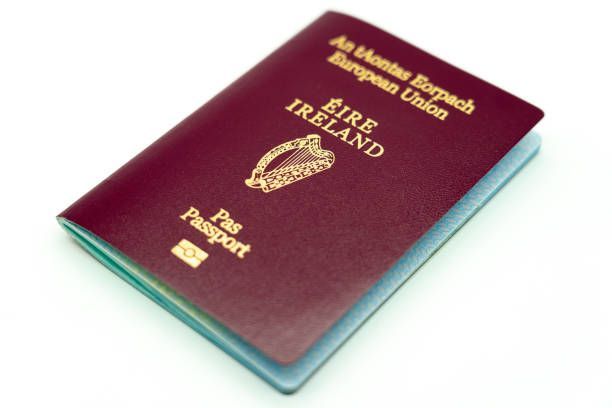
IDEA has signed a joint civil society statement, We build Ireland together: Citizenship is how we make that official, and encourages other organisations to lend their support. Led by the Irish Refugee Council, the initiative calls on Minister for Justice, Jim O’Callaghan, to withdraw proposals that would make it harder to gain Irish citizenship. The statement argues that citizenship recognises the belonging of people who put down roots here through working, studying, raising families, paying taxes and contributing to community life. It warns that granting citizenship only to people with a high income and no experience of hardship risks treating some people as more deserving of belonging than others. It also raises concerns about the proposals alongside wider changes to family reunification, income requirements for migrant workers and international protection. Taken together, the statement warns, these measures make it harder for migrants, people seeking protection and refugees to build secure lives in Ireland. IDEA members including AkiDwA, ActionAid Ireland, Africa Solidarity Centre Ireland, Comhlámh and Síolta Chroí have signed, alongside organisations from across civil society. IDEA’s support reflects the emphasis in Development Education and Global Citizenship Education on human rights, equality, solidarity and participation in society. It is also an expression of solidarity with colleagues, educators and communities who could be affected by these proposals. People who put down roots here and contribute to our communities should have a fair opportunity to gain citizenship and the security and recognition it brings. The statement calls on the Minister to focus instead on building a cohesive society that recognises the people who live, work and build Ireland together. To find out more or add your organisations support please get in touch through IDEA or the Irish Refugee Council direct.
IDEA calls for GCE to be included in Northern Ireland’s new curriculum framework IDEA recently shared its views on the new draft Northern Ireland Curriculum Framework as part of the public consultation, which closed on 30 September. Our submission welcomed the framework’s aim to give learners “access to powerful knowledge and develop the skills needed to participate fully in society, the economy and civic life.” However, we also highlighted a key gap: “global” has been dropped from the scope of citizenship education within the curriculum. Global Citizenship Education (GCE) is not mentioned at all. Alongside an important focus on the local reality in the North, we consider it vital that the curriculum also addresses the global reality. As UNESCO puts it, “economically, environmentally, socially and politically, we are linked to other people on the planet as never before” (UNESCO, 2026). We recommended integrating key dimensions of GCE and Education for Sustainable Development (ESD) into the framework without creating a new strand or making widespread amendments. Changes to the language and framing could embed GCE and ESD principles in the core capabilities and in subjects such as Geography, History, English and Drama, and Personal, Social, Civic and Careers (PSCC). Our recommendations echoed the key asks of the CADA submission . IDEA also contributed to that submission through a focus group discussion and by reviewing and providing feedback on the draft. Our recommendations were to: Include GCE and ESD as concepts in the capabilities document and cross-reference them in the subjects for Geography, History, English and Drama and PSCC. Include the concept of global citizenship in the capabilities document and in PSCC, as a distinct but complementary concept to citizenship and civic understanding. Include the concepts of solidarity, justice and local-global interconnection and interdependence (and thus shared responsibility) in the subjects English and Drama and PSCC. Increase the progression of human rights knowledge in PSCC across Stages towards its global application by Key Stage 3. Add shared responsibility and justice as key dimensions of sustainable development and global inequality to the environmental and ecological responsibility capability, as well as to Geography. Include addressing misinformation, disinformation and factchecking under the language and communication capability and in English and PSCC. Build on Northern Ireland’s experience of peace education by including opportunities, particularly in History and PSCC, for pupils to explore connections between peace and reconciliation locally and globally as part of GCE and ESD. Thank you to IDEA members who reviewed our submission and provided feedback. You can read our full submission here .
Date: Tuesday 01 December, 10.00am – 4.00pm Location: Richmond Barracks, Inchicore, Dublin 8, D08 YY05 IDEA is looking forward to welcoming all members of the Code of Good Practice for Development Education to our next Code network meeting on Tuesday 1 December, in Richmond Barracks in Inchicore, Dublin. There are places for two representatives, staff, volunteers, etc., from each Code member. One of the commitments in joining the Code is to contribute to the Community of Practice for this Code, including sharing successes and learning with other Code members and attending at least one of two Code network meetings annually. If you have questions, please contact code@ideaonline.ie.

Explore research on Global North-South partnerships in Global Citizenship Education. Join us in shaping equitable educational practices.

IDEA seeks a consultant to analyze pilot data for the GCE tool. Apply by October 6 with your CV & proposal.
IDEA, Afri, & Talamh Beo call for action on UNDROP renewal. Support rural rights & sustainable food systems. Join us in advocating today!

Join us on October 14 to discuss economic alternatives in GCE. Register now for insights on neoliberal critiques!
Join us on September 22 for the Innovation Showcase Lunch. Share innovative ideas for Global Citizenship Education with fellow members.