


Date: 25 November, 10.00am - 4.00pm Location: Brandsma Room, Carmelite Centre, Aungier St, Dublin 2 This workshop will provide an opportunity to explore the findings and recommendations of the Global North-Global South Partnerships in GCE Research , commissioned by Concern Worldwide . The event will bring together organisations working in Global Citizenship Education (GCE) to discuss the research findings, share experiences of partnership-building, and reflect on good practices for equitable and meaningful collaboration. Participants will also have the opportunity to consider how partnerships can be developed and strengthened to support GCE work and contribute to mutual learning across different contexts. The workshop is open to organisations and practitioners with an interest in Global Citizenship Education, research, and international partnership development.

18 November, 11.00am -1.00pm
Hybrid - IDEA Office, 6 Gardiner Row, Dublin 1
Friday, 06 November, 12.30pm–2.30pm
IDEA Offices, 6 Gardiner Row, Dublin 1
20 November, 10.00am – 12.00pm
Online

Thursday 12 November, 11.00am – 1.00pm
Online
Tuesday 03 November, 2.00 - 4.00pm
Online
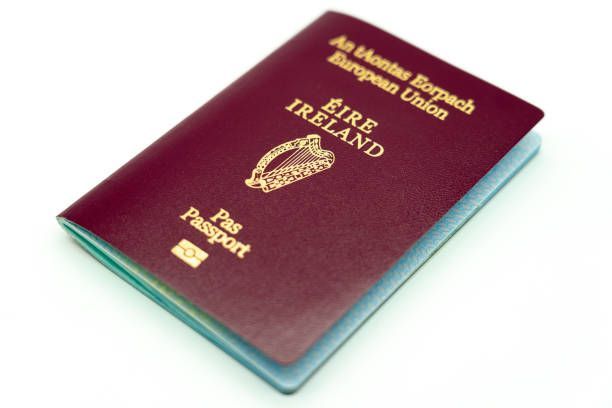
The statement calls on the Minister to focus instead on building a cohesive society that recognises the people who live, work and build Ireland together.
IDEA calls for GCE to be included in Northern Ireland’s new curriculum framework IDEA recently shared its views on the new draft Northern Ireland Curriculum Framework as part of the public consultation, which closed on 30 September. Our submission welcomed the framework’s aim to give learners “access to powerful knowledge and develop the skills needed to participate fully in society, the economy and civic life.” However, we also highlighted a key gap: “global” has been dropped from the scope of citizenship education within the curriculum. Global Citizenship Education (GCE) is not mentioned at all. Alongside an important focus on the local reality in the North, we consider it vital that the curriculum also addresses the global reality. As UNESCO puts it, “economically, environmentally, socially and politically, we are linked to other people on the planet as never before” (UNESCO, 2026). We recommended integrating key dimensions of GCE and Education for Sustainable Development (ESD) into the framework without creating a new strand or making widespread amendments. Changes to the language and framing could embed GCE and ESD principles in the core capabilities and in subjects such as Geography, History, English and Drama, and Personal, Social, Civic and Careers (PSCC). Our recommendations echoed the key asks of the CADA submission . IDEA also contributed to that submission through a focus group discussion and by reviewing and providing feedback on the draft. Our recommendations were to: Include GCE and ESD as concepts in the capabilities document and cross-reference them in the subjects for Geography, History, English and Drama and PSCC. Include the concept of global citizenship in the capabilities document and in PSCC, as a distinct but complementary concept to citizenship and civic understanding. Include the concepts of solidarity, justice and local-global interconnection and interdependence (and thus shared responsibility) in the subjects English and Drama and PSCC. Increase the progression of human rights knowledge in PSCC across Stages towards its global application by Key Stage 3. Add shared responsibility and justice as key dimensions of sustainable development and global inequality to the environmental and ecological responsibility capability, as well as to Geography. Include addressing misinformation, disinformation and factchecking under the language and communication capability and in English and PSCC. Build on Northern Ireland’s experience of peace education by including opportunities, particularly in History and PSCC, for pupils to explore connections between peace and reconciliation locally and globally as part of GCE and ESD. Thank you to IDEA members who reviewed our submission and provided feedback. You can read our full submission here .
Date: Tuesday 01 December, 10.00am – 4.00pm Location: Richmond Barracks, Inchicore, Dublin 8, D08 YY05 IDEA is looking forward to welcoming all members of the Code of Good Practice for Development Education to our next Code network meeting on Tuesday 1 December, in Richmond Barracks in Inchicore, Dublin. There are places for two representatives, staff, volunteers, etc., from each Code member. One of the commitments in joining the Code is to contribute to the Community of Practice for this Code, including sharing successes and learning with other Code members and attending at least one of two Code network meetings annually. If you have questions, please contact code@ideaonline.ie.

Explore research on Global North-South partnerships in Global Citizenship Education. Join us in shaping equitable educational practices.